
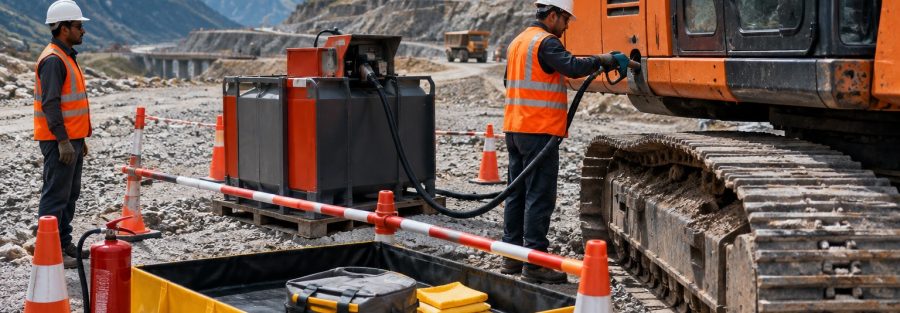
Remote construction projects frequently transport diesel to excavators, tippers, generators and other equipment operating far from permanent fuel stations. This familiar activity can become extremely dangerous when fuel is carried in unsuitable containers, transferred between vehicles or handled near ignition sources.
On 24 October 2026, seven people were killed following a fire during diesel transfer at a road-construction site in Andhra Pradesh. Police reported that the fire spread to approximately 250 litres of diesel stored in drums inside a pickup vehicle. The precise ignition source remained under investigation.
Plan refuelling before work starts
Every site should have an approved procedure covering authorised locations, transfer equipment, supervision, fuel quantities, emergency isolation, fire response, spill response, contractor responsibilities and inspection records. Open containers, buckets, makeshift hoses and uncontrolled gravity transfer should be prohibited.
Establish a safe refuelling area
Where practicable, refuelling should occur on level ground in a controlled area away from:
- Hot work, smoking and open flames
- Electrical sparks and temporary wiring
- Explosives and blasting materials
- Public roads and pedestrian routes
- Occupied vehicles
- Combustible storage
- Drains and water bodies
Use barricades, warning signs and adequate lighting. Prevent unnecessary personnel from entering the refuelling area.
Control the vehicle and equipment
- Stop and secure the equipment.
- Switch off the engine unless an approved system specifically requires otherwise.
- Apply the parking brake and lower attachments.
- Prevent unintended vehicle movement.
- Inspect the tank, cap, hose and transfer connections.
- Verify the correct fuel and available tank capacity.
- Provide suitable bonding or earthing where required by the transfer arrangement.
Use suitable containers and transfer equipment
Fuel should be carried and transferred using equipment suitable for petroleum service. Check container and tank condition, secure caps, labels, leak-free hoses, pumps, shut-off arrangements and overfill prevention. Protect containers from impact and separate them from passengers, tools and ignition sources during transport.
Fire and spill preparedness
The refuelling point should have suitable extinguishers, spill-control materials, emergency shut-off arrangements, communication with the emergency team, emergency contact information and a safe evacuation area. Workers must not attempt to fight a rapidly developing fuel fire when evacuation is the safer option.
Behaviour-based safety observations
Supervisors should intervene when they observe:
- Smoking or ignition sources during refuelling
- Engines running unnecessarily
- Unsafe manual decanting
- Damaged hoses or leaking connections
- Missing barricades or extinguishers
- Fuel transported with passengers
- Refuelling near hot work
- Leaks left unreported
- Workers standing in the line of fire
Track these behaviours as leading indicators rather than addressing them only after an incident.
How Safety Zest can help
Safety Zest can include Mobile Refuelling and Remote Fuel-Handling Safety in construction SHE audits for road, railway, metro, transmission, mining, quarrying and other remote infrastructure projects.
The review can cover procedures, onsite practices, equipment, contractor controls, emergency preparedness, BBS observations and corrective-action tracking. PESO licensing, vehicle certification, tank approval and hazardous-goods certification are excluded unless separately included through an eligible specialist.
Need a construction fuel-handling audit or toolbox programme?
Visit www.safetyzest.com, call +91-9538541881 or email info@safetyzest.com.
Safety First Always.
Further reading
Updated police reporting on the Andhra Pradesh construction-site incident